
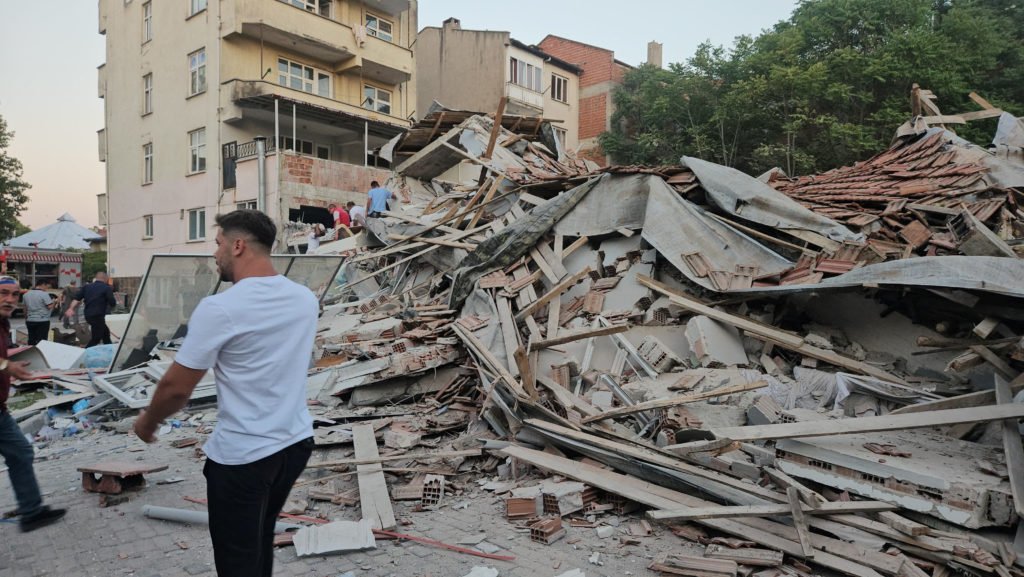
A powerful earthquake with a magnitude of 6.1 hit western Türkiye, resulting in one fatality and several injuries. The quake caused widespread panic and damage, reminding residents of the region’s vulnerability to seismic activity. Here’s a breakdown of the event and its aftermath.
The Earthquake: Key Details
The earthquake struck near the city of Izmir, a densely populated area in western Türkiye. It occurred at a shallow depth, amplifying its impact. Tremors were felt across the region, causing buildings to shake and people to flee into the streets.
Casualties and Damage
One person died, and several others sustained injuries. Emergency services responded quickly to rescue those trapped under debris. Additionally, the quake caused structural damage to buildings and infrastructure, leaving many residents displaced.
Immediate Response
Authorities swiftly mobilized rescue teams to the affected areas. Hospitals prepared for an influx of patients, while shelters were set up for those who lost their homes. Moreover, officials urged residents to stay outdoors as aftershocks continued.
Türkiye’s Seismic Risk
Türkiye lies on active fault lines, making it prone to earthquakes. The region has experienced devastating quakes in the past, including the 1999 Izmit earthquake that killed thousands. This latest event underscores the need for ongoing preparedness and improved building standards.
Public Reaction
The earthquake triggered widespread fear among residents. Many took to social media to share their experiences and check on loved ones. Furthermore, the event has reignited discussions about earthquake safety and emergency response protocols.
Aftershocks and Ongoing Concerns
Aftershocks followed the main quake, keeping residents on edge. Experts warned that more tremors could occur in the coming days. Consequently, people were advised to avoid unstable structures and remain cautious.
Looking Ahead: Recovery and Prevention
Recovery efforts are now underway, with a focus on rebuilding damaged areas and supporting affected families. The earthquake also highlights the importance of investing in earthquake-resistant infrastructure.
In conclusion, the magnitude 6.1 earthquake in western Türkiye serves as a stark reminder of the region’s seismic vulnerability. While the immediate response was swift, long-term solutions are essential to mitigate future risks. Transitioning to safer building practices and enhancing emergency preparedness can save lives in the event of another quake.